
How to Make Pet First Aid Salve
If your dog or cat's been dealing with dry patches, hot spots, or everyday skin irritation, a homemade herbal salve is one of the simplest things you can make in your own kitchen. This recipe uses calendula, plantain, and lemon balm — three herbs herbalists have leaned on for skin support for generations — infused into oil and set with beeswax. No fillers, no mystery ingredients, just herbs, oil, and wax.
Fair warning: salve-making may cause an addiction to growing your own medicinal herbs and making your own remedies. We are not responsible for increased gardening budgets, forgotten dinners because you were busy hanging out with your plants, or an overall uptick in well-being and joy.
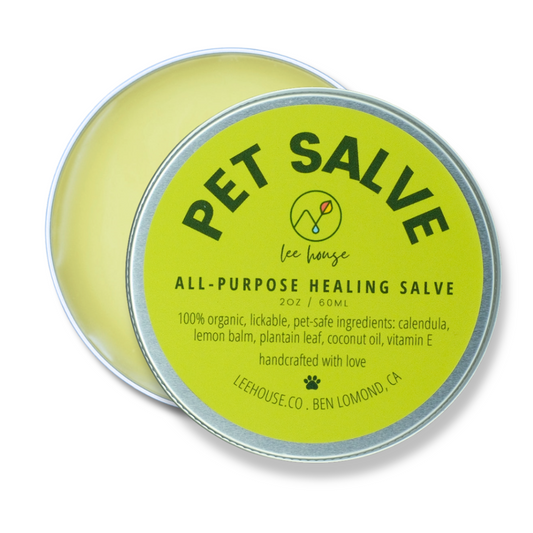
When your pet needs a little extra skin support, reach for something you made yourself. Our Pet Salve Soothing Skin Relief is crafted from the same time-honored herbs in this recipe — or browse our full Pet Salves & Oils for Natural Relief collection if you'd rather skip the double-boiler and go with a ready-made option.

Ingredients
- 1 cup (8 oz) herb-infused oil — we use an equal mix of calendula, plantain, and lemon balm infused in coconut oil
- 2 oz beeswax pastilles (swap in candelilla wax for a vegan option)
This makes about 10 oz of salve. Halve the recipe if you need less.
Equipment Needed
- A double-boiler, or a make-shift one — a glass Pyrex or stainless steel bowl set on top of a saucepan with water below works fine. A true double-boiler setup isn't optional, though: it's what keeps the oil from overheating and losing potency.
- A clean, small glass jar with a tight-fitting lid. Any jar works for personal use — or pick up 2 oz salve tins online if you want something closer to what we use.
On ratios: salve-making generally runs 1 part beeswax to 4–8 parts oil, depending on how firm you want the finished salve. This recipe's 4:1 oil-to-wax ratio lands on the medium side — firm enough to hold its shape, but it softens as soon as it hits your hand for application. Go lighter on the wax for something softer, or heavier for a firmer salve.
Why These Herbs
- Calendula — a classic go-to for supporting healthy-looking skin and calming everyday irritation.
- Plantain (the weedy garden herb, not the banana relative) — often used for soothing skin that's been scratched, bitten, or generally roughed up.
- Lemon balm — soothing and anti-inflammatory, which makes it a natural pairing for calming irritated or inflamed skin.
Together they make a well-rounded, everyday support salve — not a treatment for anything serious, but a solid first reach for minor skin fuss.
A note on yarrow: Personally, I love yarrow in a first-aid salve. Its antibacterial properties make it incredibly useful for cleaning cuts and scrapes. It's come in like a first responder in some pretty intense situations with my dogs. However, yarrow can be toxic if ingested in large amounts, and it's a potent allergen — some animals and people have reactions to it. My advice: do a patch test, and avoid using it solo — pair it with a gentler herb like calendula rather than making it the whole show.
Herb Combos to Try
Once you've got the base method down, you can build all kinds of salves around it. A few combos worth trying:
- Yarrow + calendula — leans into first-aid territory, good for cuts, scrapes, and everyday nicks.
- Chamomile + lavender — calming and gentle, nice for itchy or fussy skin.
- Plantain + chickweed — a soothing, drawing combo for bites and stings.
It's tempting to want to throw every "good" herb into one salve, but in herbalism, simple is best. Pick one or two herbs that match what you're actually trying to support, and let them do their work — you don't need eight ingredients to make something effective.
Instructions
- Have your clean glass jar or tins ready to go.
- Add just enough water to your double boiler that the top bowl or pot sits in contact with the water below.
- In the top portion of the double-boiler, combine your herbal oil and beeswax.
- Heat over medium-low. The goal is to melt the beeswax low and slow — always err on the side of less heat, since overheating strips potency from your herbal oils.
- Keep an eye on the mixture and stir routinely with a silicone spoon or scraper until the beeswax is fully melted. It'll turn translucent.
- Once melted, let it sit over the heat for another minute or two so the oil and wax fully emulsify. Pull it too early and your salve may harden with lumps or spots. When it's ready, remove from heat.
- While it's still hot, carefully pour the salve into your containers. It'll start to harden fast — if it firms up before you finish pouring, just return the pot to low heat until it's liquid again.
- Let the containers cool completely with the lids off.
- Once fully cooled, cap your tins or jars and store in a cool, dry place until you need them.
Before you use it: dab a small amount on a patch of your pet's skin and wait a few hours to make sure there's no reaction — this matters most if you've added yarrow to your blend, since a small number of pets are sensitive to it topically.
Cleaning Up
Wipe down your pots, vessels, and stirrers with a paper towel first to clear off the excess wax and salve. From there, fill the sink with boiling water and dish soap, wash everything well, then run it through the dishwasher for good measure. If you've got a better salve-cleanup hack, drop it in the comments — we'd love to hear it.
This DIY pet skin relief salve keeps for about a year, or longer if stored somewhere cool.
FAQ
How often can I apply this salve? A light layer once or twice a day on the affected area is plenty. There's no need to overdo it — a little goes a long way.
Is it safe if my pet licks it? The ingredients are food-safe and gentle, so an occasional lick isn't a concern. That said, salves work best when they have time to absorb, so try to distract your pet for a few minutes after applying, or apply right before a walk or a meal.
Can I use this on open wounds or deep cuts? Ideally, an open wound or deep cut gets a vet's eyes on it — that's always the first call. But if vet care isn't immediately available, a clean herbal salve like this one, especially with an antibacterial herb like yarrow in the mix, is a reasonable stopgap until you can get proper care.
Can I use a different base oil or herb combo? Absolutely. This salve base (any herb-infused oil plus beeswax) is flexible — swap in whatever herbs suit what your pet needs, as long as they're safe for pets and properly infused.
We'd love to see how yours turns out — snap a photo of your finished salve (or your very good boy or girl enjoying it) and share it in the comments or tag us. It's always fun to see what everyone's growing and making.
These statements have not been evaluated by the Food and Drug Administration. This product is not intended to diagnose, treat, cure, or prevent any disease.